

Short answer
A reading like "120/80, pulse 72" means a systolic pressure of 120 mmHg (while your heart beats), a diastolic pressure of 80 mmHg (between beats) and a heart rate of 72 beats per minute. Under the AHA/ACC guideline, normal blood pressure is under 120/80, and the AHA puts a normal resting pulse at 60–100.
The three numbers on your monitor
Most home monitors show three lines, often labeled SYS, DIA and PUL (or PULSE). The first two are pressures, measured in millimeters of mercury (mmHg). The third is your heart rate in beats per minute.
When you write a reading down, the pressures go first as a fraction, systolic over diastolic: 128/82. The pulse is a separate number, so "128/82, pulse 70" is the full record.
Systolic: the pressure when your heart beats
Systolic is the top number. The AHA describes it as the pressure your blood pushes against your artery walls when the heart beats. The NHS puts it another way: it's the highest level your blood pressure reaches during each heartbeat.
Under the AHA/ACC guideline, systolic under 120 is normal, 120–129 is elevated, 130–139 is stage 1 hypertension and 140 or higher is stage 2. More detail is in our guide to systolic blood pressure.
Diastolic: the pressure between beats
Diastolic is the bottom number: the pressure in your arteries while your heart muscle rests between beats. It's the lowest level your blood pressure reaches.
Under the AHA/ACC guideline, diastolic under 80 is in the normal or elevated range (depending on systolic), 80–89 is stage 1, and 90 or higher is stage 2. Our guide to diastolic blood pressure explains how it changes with age.
Pulse: a heart rate, not a pressure
The pulse figure is how many times your heart beat per minute during the measurement. It doesn't affect your blood pressure stage, but it adds context. The AHA says a normal resting heart rate is 60–100 beats per minute when you're sitting or lying down, calm and feeling well.
If your pulse is high, ask yourself whether you've just walked in, had caffeine, or feel anxious. Those can raise both your pulse and your blood pressure for a while. A resting pulse that's often outside 60–100, or one that comes with dizziness or palpitations, is worth mentioning to a doctor.
How to read the two pressures together
Under the AHA/ACC chart, you look at both pressures and take the higher category. A few examples:
- 118/76: normal (both numbers in the normal range)
- 124/78: elevated (systolic 120–129, diastolic under 80)
- 122/86: stage 1 (diastolic is in the 80–89 band)
- 142/84: stage 2 (systolic is 140 or higher)
- Higher than 180 and/or 120: severe; retest after a minute and call emergency services if you have symptoms such as chest pain, shortness of breath or trouble speaking
Other guidelines use different cut-offs, which we compare in the blood pressure chart guide.
Two numbers you can work out yourself
Your systolic and diastolic can be combined into two more figures that some doctors find useful:
- Pulse pressure = systolic minus diastolic. For 120/80, that's 40.
- Mean arterial pressure (MAP) = diastolic + (systolic minus diastolic) ÷ 3. For 120/80, that's about 93.
Pulse pressure tends to widen with age as arteries stiffen. In the Framingham Heart Study, it became the strongest predictor of coronary heart disease in people 60 and over. MAP is an estimate of the average pressure across a whole heartbeat.
Why one reading can mislead
Blood pressure isn't fixed. It shifts with posture, breathing, talking, a full bladder, caffeine, exercise and stress. Some people also read higher in a clinic than at home, which is known as the white coat effect.
That's why guidelines base decisions on averages. NICE, for example, confirms a high clinic reading with home or 24-hour monitoring before diagnosing hypertension. To make your own readings comparable, sit quietly for about 5 minutes, keep your arm supported at heart level and measure at similar times each day. Our guide on taking accurate measurements covers the rest.
How CardiLog records a reading
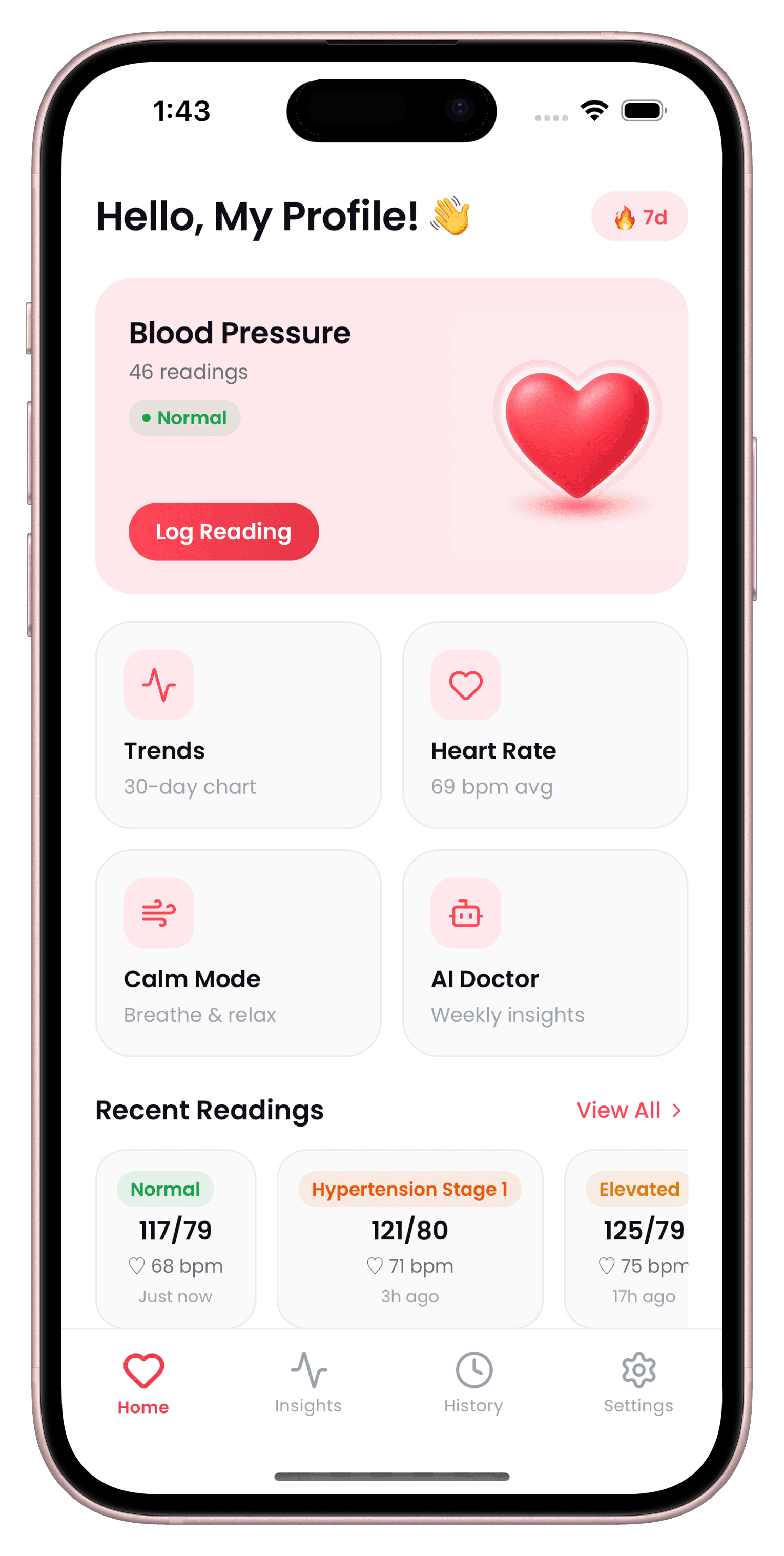
In CardiLog you can type your three numbers in, or point your phone camera at the monitor's display and let on-device text recognition fill them in. You can also import readings from Apple Health. CardiLog doesn't connect to monitors over Bluetooth.
Each reading shows its AHA stage, mean arterial pressure and pulse pressure. You can add a note, context tags (such as After Exercise, Caffeine, Stressed or Medication Taken) and where you measured (Home, Clinic, Pharmacy or Travel). Those tags make it easier to spot why a reading was higher than usual. See blood pressure logging for the full list.
Sources
- American Heart Association: Understanding Blood Pressure Readings
- American Heart Association: All About Heart Rate (Pulse)
- NHS: Blood pressure test
- Franklin SS et al. Does the relation of blood pressure to coronary heart disease risk change with aging? Circulation 2001
- NICE NG136: Hypertension in adults, diagnosis and management (recommendations)
This guide is general information, not medical advice. CardiLog is not a medical device. Talk to your doctor about your own readings.