

Short answer
Systolic blood pressure is the top number in a reading: the pressure in your arteries when your heart contracts. Under the AHA/ACC guideline, under 120 mmHg is normal, 120–129 is elevated, 130–139 is stage 1 hypertension and 140 or higher is stage 2. Higher than 180 is severe, and with symptoms like chest pain or trouble speaking you should call emergency services.
What systolic pressure measures
Every time your heart contracts, it pushes blood into your arteries and the pressure inside them peaks. That peak is your systolic pressure, the first number on your monitor (often labeled SYS). The NHS describes it as the highest level your blood pressure reaches when your heart pumps blood around the body.
It's measured in millimeters of mercury (mmHg). In a reading of 132/84, the systolic is 132. The second number is your diastolic pressure, the pressure between beats.
Systolic ranges by guideline
The cut-offs depend on which guideline your doctor uses. Here's the systolic side of each:
- AHA/ACC (US): under 120 normal, 120–129 elevated, 130–139 stage 1, 140 or higher stage 2, higher than 180 severe
- ESC 2024 (Europe): under 120 non-elevated, 120–139 elevated, 140 or higher hypertension
- NICE NG136 (UK): hypertension from 140 in a clinic, confirmed by a home or ambulatory average of 135 or higher
Remember that these are only half the picture. A reading moves into a higher category if either number crosses the line. The full tables are in our blood pressure chart.
Why systolic tends to rise with age
The Framingham Heart Study followed people for up to 30 years. Among those not on blood pressure medication, systolic rose in a steady line from age 30 through 84. Diastolic rose too until about 50 to 60, then started to drop.
The researchers tied this to stiffer large arteries. A young, flexible aorta stretches with each heartbeat and absorbs some of the pressure. A stiffer one can't, so the peak pressure climbs. The AHA lists stiffer arteries, plaque buildup and more heart and blood vessel disease as reasons systolic tends to rise with age.
When the top number is high and the bottom number isn't, doctors call it isolated systolic hypertension. It's a common pattern later in life. It's still high blood pressure, and the treatment goal under the 2025 AHA/ACC guideline (under 130/80 for most adults) applies to older adults too. See normal blood pressure by age for the data.
Why doctors watch the top number
Either number can be used to diagnose high blood pressure. Even so, the AHA says systolic tells more about heart disease risk for people over 50.
A Framingham analysis of about 6,500 adults found the shift happens gradually. Under 50, diastolic was the stronger predictor of coronary heart disease. From 50 to 59, systolic, diastolic and pulse pressure were about equal. From 60 on, pulse pressure (systolic minus diastolic) predicted risk best, which makes a high systolic with a low diastolic a pattern worth taking seriously.
What can push a single reading up
Systolic is the more jumpy of the two numbers. A single reading can come out higher than your usual level after:
- Coffee or other caffeine
- Walking, climbing stairs or exercise shortly before measuring
- Stress, anxiety or rushing
- Talking while the cuff inflates
- A full bladder
- Measuring at a clinic, if you tend to get nervous there
That's why guidelines rely on averages. Sit quietly for 5 minutes with your back supported and your arm at heart level, and take two readings a minute apart. Our guide on taking accurate measurements covers the full routine.
When a systolic reading needs fast action
If your systolic is higher than 180, wait one minute and measure again. If it's still above 180 and you feel fine, contact your doctor that day.
If it's above 180 and you have chest pain, shortness of breath, back pain, numbness, weakness, a change in vision or difficulty speaking, call 911 or your local emergency number. Don't wait for another reading.
Tracking systolic in CardiLog
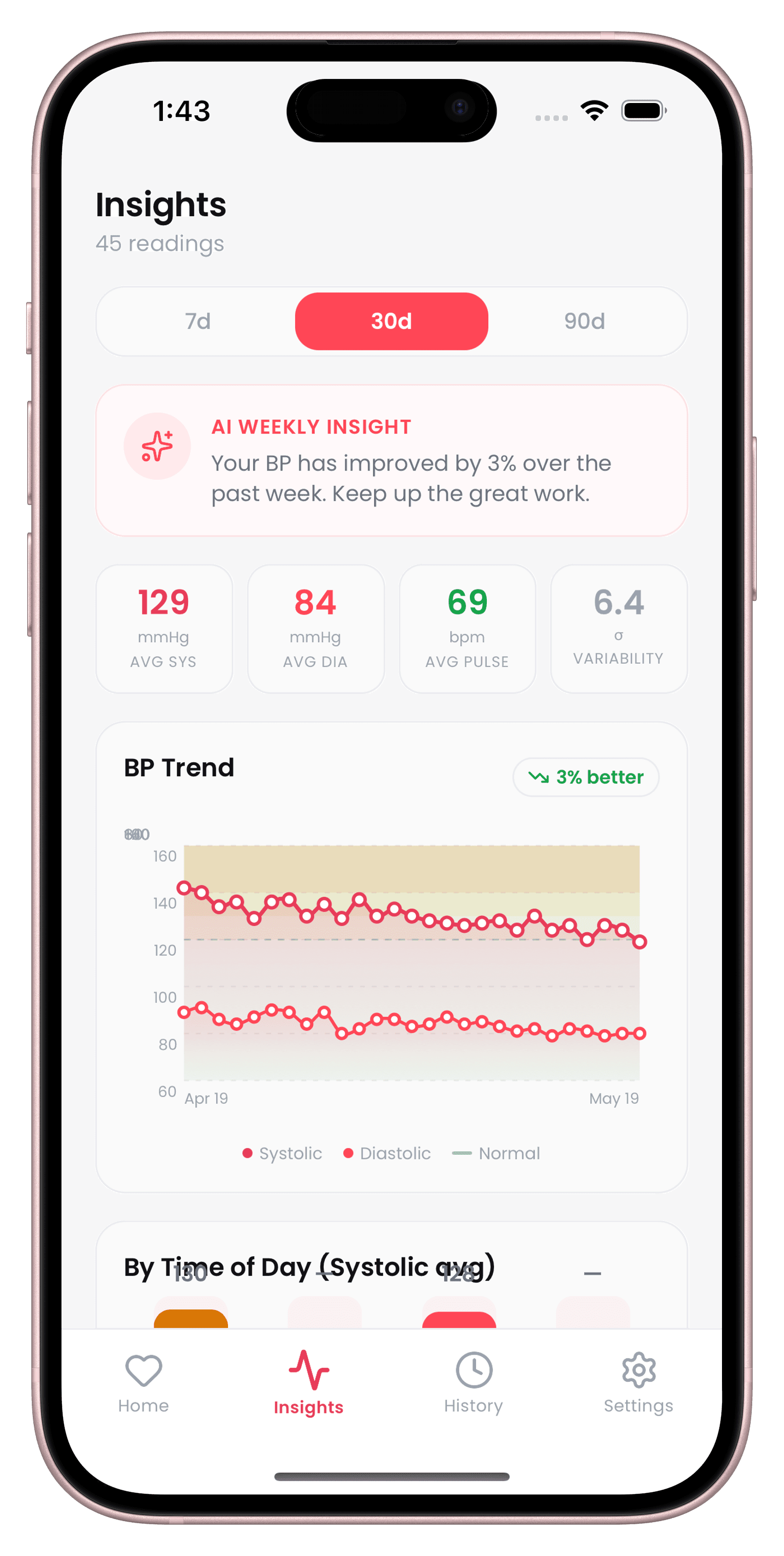
CardiLog charts your readings over 7, 30 and 90 days, so you can see whether your systolic is drifting rather than reacting to one number. Each reading gets an AHA stage, and a reading of 180/120 or above opens an emergency screen.
A weekly insight, built on your phone from fixed rules rather than an AI model, looks for a few systolic patterns:
- Morning surge: a morning systolic more than 20 mmHg above the previous night's reading
- Sustained rise: systolic up 5 mmHg or more over the last 14 days compared with the 14 days before
- White coat effect: once you have 5 or more home and 3 or more clinic readings, it flags a clinic systolic average 10 mmHg or more above your home average
These are prompts to bring to your doctor, not diagnoses. More on how they work in insights.
Sources
- American Heart Association: Understanding Blood Pressure Readings
- American Heart Association: Top Things to Know, 2025 High Blood Pressure Guideline
- Franklin SS et al. Hemodynamic patterns of age-related changes in blood pressure: the Framingham Heart Study. Circulation 1997
- Franklin SS et al. Does the relation of blood pressure to coronary heart disease risk change with aging? Circulation 2001
- NHS: Blood pressure test
This guide is general information, not medical advice. CardiLog is not a medical device. Talk to your doctor about your own readings.