

Short answer
Diastolic blood pressure is the bottom number in a reading: the pressure in your arteries while your heart rests between beats. Under the AHA/ACC guideline, under 80 mmHg is normal (if systolic is also under 120), 80–89 is stage 1 hypertension and 90 or higher is stage 2. Higher than 120 is severe, and with symptoms like chest pain or trouble speaking you should call emergency services.
What diastolic pressure measures
Between heartbeats, your heart muscle relaxes and refills. Your arteries still hold pressure during that pause, and the lowest point it reaches is your diastolic pressure. It's the second number on your monitor, often labeled DIA.
In a reading of 128/84, the diastolic is 84. The first number is your systolic pressure, the peak during each beat.
Diastolic ranges by guideline
Each guideline draws the diastolic lines a little differently:
- AHA/ACC (US): under 80 normal or elevated, 80–89 stage 1, 90 or higher stage 2, higher than 120 severe
- ESC 2024 (Europe): under 70 non-elevated, 70–89 elevated, 90 or higher hypertension
- NICE NG136 (UK): hypertension from 90 in a clinic, confirmed by a home or ambulatory average of 85 or higher
Under the AHA/ACC chart, your diastolic alone can move you up a stage. A reading of 118/84 has a normal systolic but is still stage 1 hypertension because of the bottom number. See the full tables in our blood pressure chart.
How diastolic changes with age
Diastolic doesn't follow the same path as systolic. The Framingham Heart Study tracked people for up to 30 years and found diastolic rose with systolic until about age 50 to 60, then started to decline. Systolic kept climbing the whole time.
The researchers said the late fall in diastolic wasn't explained by people dropping out or by "burned out" high blood pressure. It fit better with large arteries getting stiffer. A stiff artery doesn't hold pressure as well between beats, so the bottom number drops while the top number rises.
That widening gap is pulse pressure. It's one reason the same diastolic number can mean different things at 35 and at 75.
Why diastolic matters more when you're younger
A Framingham analysis of about 6,500 adults compared which number best predicted coronary heart disease over 20 years:
- Under 50: diastolic was the strongest predictor. Each 10 mmHg higher diastolic was linked to about 34% higher risk.
- 50–59: systolic, diastolic and pulse pressure were roughly equal.
- 60 and over: pulse pressure was the best predictor, and with systolic held equal, a lower diastolic was tied to higher risk.
So if you're in your 30s or 40s and your bottom number keeps reading 85 or 90, don't dismiss it because the top number looks fine. A high diastolic with a normal systolic is called isolated diastolic hypertension, and it still counts.
When a low diastolic is worth noticing
The NHS defines low blood pressure as a reading under 90/60. A low diastolic on its own often causes no symptoms. If you feel dizzy, light-headed or faint, especially when standing up, tell your doctor.
In older adults, a low diastolic commonly shows up next to a high systolic, for example 152/62. That combination gives a wide pulse pressure, which Framingham data linked to higher heart risk after 60. How to treat that pattern is a decision for your doctor.
When a diastolic reading needs fast action
If your diastolic is higher than 120, wait one minute and measure again. If it's still that high and you have no symptoms, contact your doctor the same day.
If it's above 120 and you have chest pain, shortness of breath, back pain, numbness, weakness, a change in vision or trouble speaking, call 911 or your local emergency number straight away.
Tracking diastolic in CardiLog
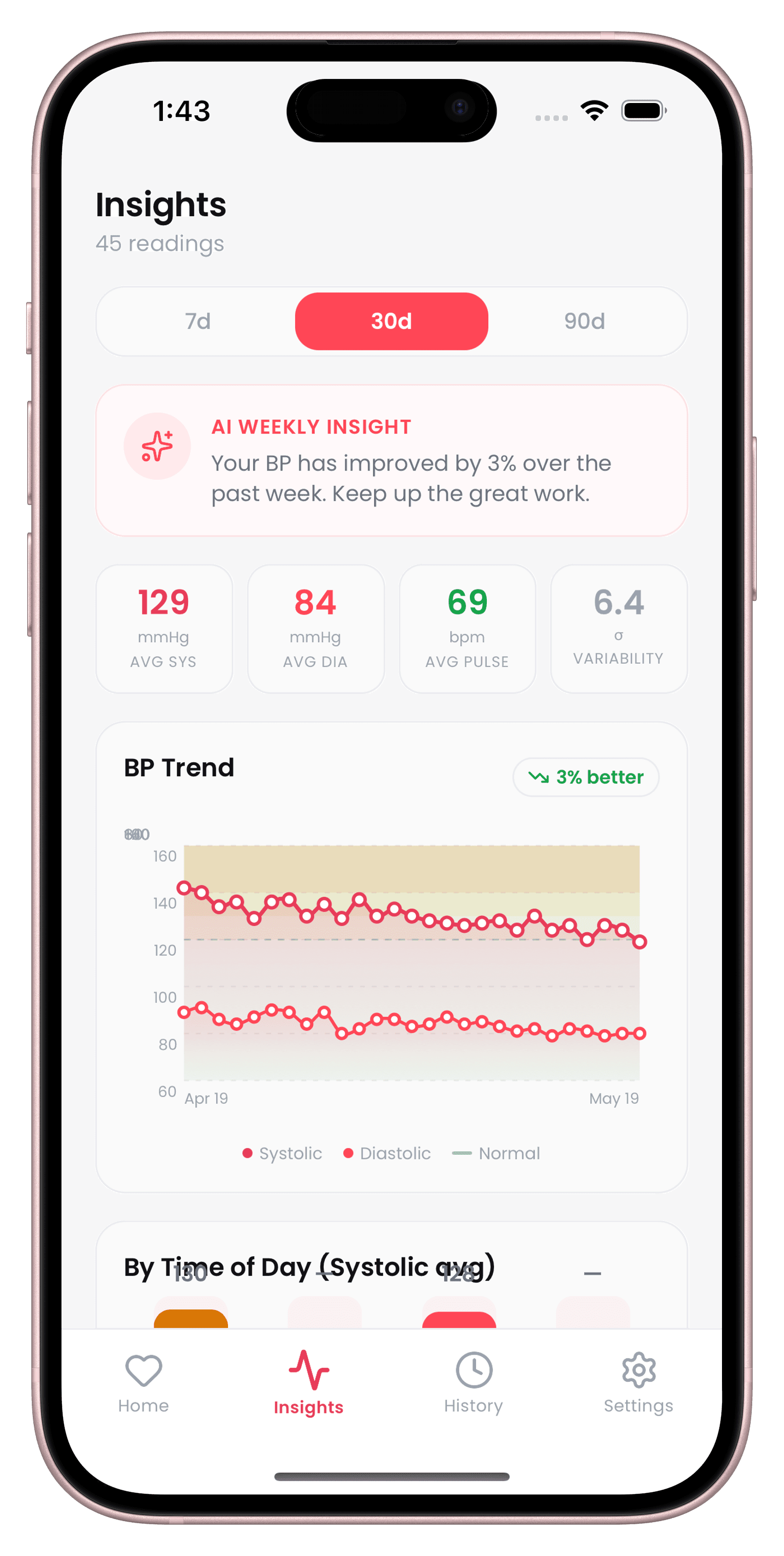
CardiLog charts both numbers over 7, 30 and 90 days, so you can see if your diastolic is creeping up or drifting down. Each reading also shows its pulse pressure and mean arterial pressure, and an AHA stage that takes the higher of your two numbers into account.
Context tags such as Caffeine, Stressed, Poor Sleep or Alcohol help explain an odd reading later. When it's time for an appointment, you can export a PDF report with your readings, averages, MAP, pulse pressure and stages, covered in doctor reports. CardiLog is a logbook, not a medical device, so use it to inform the conversation with your doctor.
Sources
- American Heart Association: Understanding Blood Pressure Readings
- Franklin SS et al. Hemodynamic patterns of age-related changes in blood pressure: the Framingham Heart Study. Circulation 1997
- Franklin SS et al. Does the relation of blood pressure to coronary heart disease risk change with aging? Circulation 2001
- NICE NG136: Hypertension in adults, diagnosis and management (recommendations)
- NHS: Low blood pressure (hypotension)
This guide is general information, not medical advice. CardiLog is not a medical device. Talk to your doctor about your own readings.