

Short answer
Pulse pressure is your systolic number minus your diastolic number. For 120/80 it's 40 mmHg, which is about average for a resting adult. A gap that's regularly 60 mmHg or more is worth raising with your doctor, because it's linked to stiffer arteries, especially in older adults.
Pulse pressure calculator
Pulse pressure = systolic − diastolic
Enter a reading to see the result. It's worked out on this page and not saved.
How to work out your pulse pressure
Take the top number of your reading and subtract the bottom number. That's it. Most home monitors don't show pulse pressure, so you'll generally have to do the subtraction yourself or use an app that does it for you.
- 120/80: pulse pressure 40 mmHg
- 135/85: pulse pressure 50 mmHg
- 150/80: pulse pressure 70 mmHg
- 110/90: pulse pressure 20 mmHg
The last two examples look very different, even though neither diastolic number is unusual. That's why pulse pressure can tell you something that a single systolic or diastolic number doesn't.
What counts as a normal pulse pressure
Around 40 mmHg is the figure most sources give for a healthy adult at rest. There isn't one agreed cut-off for "too wide", and sources describe it differently:
- Cleveland Clinic says pulse pressures of 50 mmHg or more can raise the risk of heart disease, arrhythmia and stroke, and suggests seeing a provider if home checks regularly show 60 mmHg or more.
- European guidelines link a pulse pressure above 60 mmHg in older adults to stiffening of the arteries.
- Clinicians generally reserve the label "truly widened" for 100 mmHg or more.
- A narrow pulse pressure is typically defined as one-quarter of the systolic number or less (for example, under 30 with a systolic of 120).
So treat these as rough markers, not a diagnosis. One reading outside the range means much less than a pattern across several weeks.
Why pulse pressure tends to widen with age
Healthy arteries stretch a little with each heartbeat, which cushions the pressure. As arteries stiffen with age, they cushion less. Systolic pressure climbs, while diastolic often stays flat or even drops. The result is a wider gap.
That's why a wide pulse pressure is more common after 60, and also more common in people with diabetes or chronic kidney disease. Cleveland Clinic notes that every 10 mmHg increase in pulse pressure has been linked to about a 23% higher risk of coronary artery disease.
Age isn't the only cause. A leaky or narrowed aortic valve, an overactive thyroid and severe anemia can all widen it. On the other hand, some endurance athletes have a wide pulse pressure simply because their heart pumps a lot of blood per beat, and their arteries are flexible.
What a narrow pulse pressure can mean
A narrow gap can point to the heart pumping less blood than it should. Serious causes include heart failure, significant blood loss and fluid pressing on the heart (cardiac tamponade). Those situations come with obvious symptoms in most cases and are dealt with in hospital.
At home, an odd narrow reading is more often a measurement problem: the cuff slipped, you moved, or the monitor struggled to pick up the pulse. Retake it after 5 minutes of quiet rest before you read anything into it.
Is it worth tracking at home?
It can be, as long as you look at the pattern and not single readings. Pulse pressure inherits any error in the reading itself, so a cuff over a sleeve or talking during the measurement throws it off too. Our guide to taking an accurate reading at home covers the routine.
It's also worth knowing what pulse pressure isn't. The blood pressure stages doctors use (Normal, Elevated, Stage 1, Stage 2) are based on your systolic and diastolic numbers directly, not on the gap between them. If you want to understand the top number better, read our guide to systolic blood pressure.
Doctors also don't generally try to treat pulse pressure by itself. Lowering blood pressure in someone with a wide gap can push the diastolic number too low, so they weigh the whole picture.
When to talk to a doctor
- Your home readings regularly show a pulse pressure of 60 mmHg or more.
- Your pulse pressure is often a quarter of your systolic number or less.
- The gap has been growing steadily over months.
- You also have symptoms like shortness of breath, swollen ankles, palpitations or dizziness.
If a reading is 180/120 or higher and you have chest pain, shortness of breath, back pain, numbness, weakness, vision changes or trouble speaking, call emergency services. Don't wait to recheck.
How CardiLog shows pulse pressure
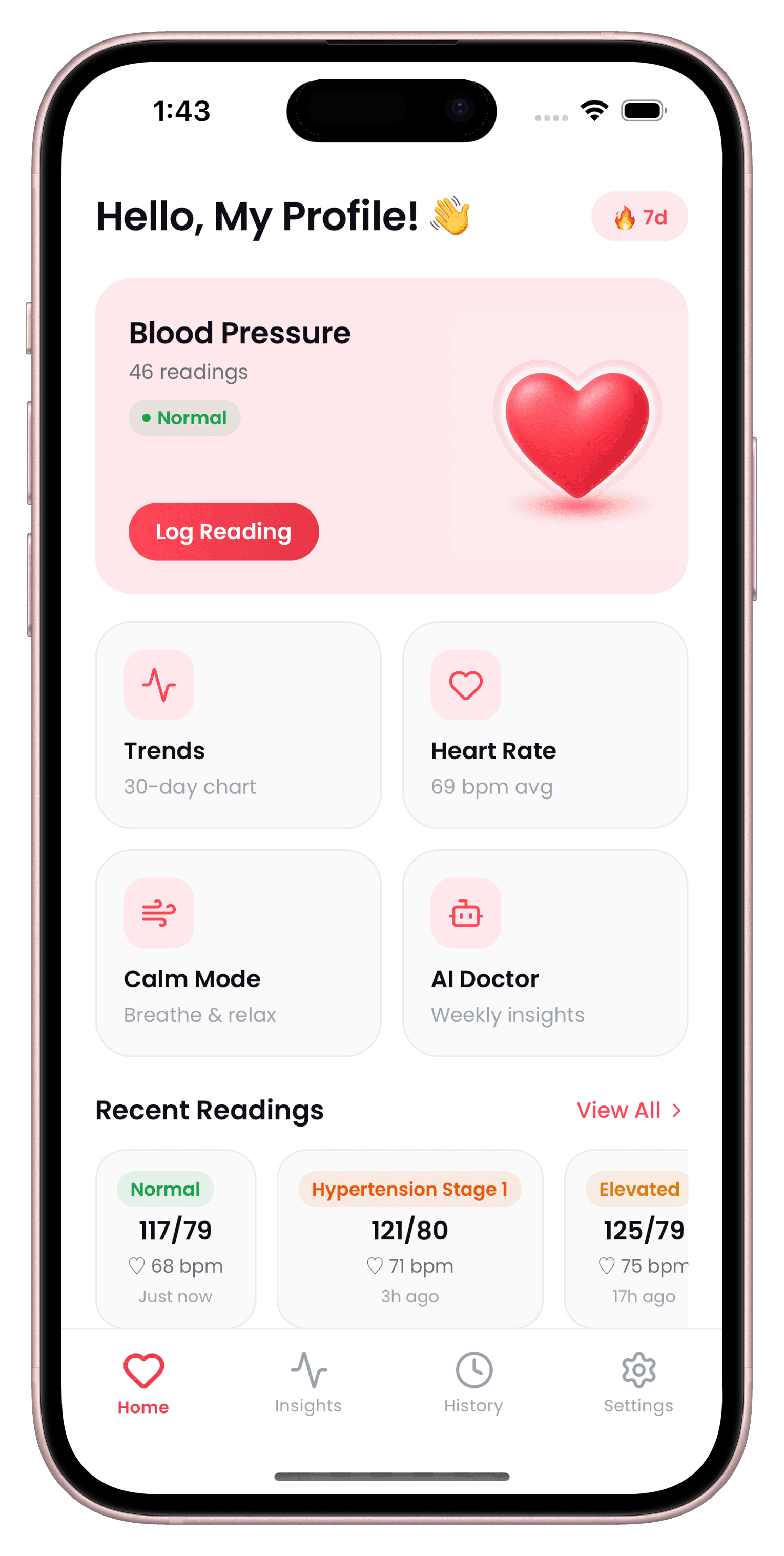
CardiLog works out pulse pressure (systolic minus diastolic) and mean arterial pressure for the readings you log, so you don't have to do the maths. You can enter readings by hand, scan your monitor's screen with the camera, or import them from Apple Health. See blood pressure logging for how that works.
Both numbers are included in the PDF report you can export for an appointment, next to your readings, averages and stage. Context tags such as Poor Sleep, Caffeine or After Exercise help explain an unusual gap later.
CardiLog isn't a medical device and doesn't interpret your pulse pressure for you. It gives you the numbers in one place so you and your doctor can look at the trend together.
Sources
- Cleveland Clinic: Pulse Pressure
- Medical News Today: What does a wide pulse pressure mean?
- CDC: Measuring Your Blood Pressure
This guide is general information, not medical advice. CardiLog is not a medical device. Talk to your doctor about your own readings.