

Short answer
The symbol means the monitor detected uneven gaps between heartbeats while it measured. Brands use different rules (Omron, for example, flags beats 25% shorter or longer than average, seen 2 or more times in one reading). The reading may be less accurate, so sit still and measure again. If the symbol shows up often, tell your doctor: only an ECG can diagnose a rhythm problem such as atrial fibrillation.
What the symbol actually measures
A home monitor finds your pulse from small pressure changes in the cuff, so it can time the gaps between beats. When those gaps vary more than the monitor allows, it shows the irregular heartbeat symbol (often a heart icon, sometimes labelled IHB). The rule differs by brand:
- Omron: a beat that comes 25% sooner or later than the average rhythm, detected 2 or more times during one measurement.
- Philips: the variation in the time between beats passes a preset limit. Philips doesn't publish the number.
- iHealth: shows an icon next to the pulse in its app and says the blood pressure reading may be inaccurate.
So the same heartbeat pattern can trigger the symbol on one monitor and not on another. Check your own monitor's manual for its exact rule.
What can trigger it besides a rhythm problem
- Movement: Omron's manual says the symbol may appear when the monitor detects arm movement.
- Shifting your arm or body during the reading, for the same reason. Omron also says to stay still and not talk while measuring.
- Normal rhythm changes: Microlife notes that harmless patterns, such as the slight speeding and slowing of the heart with breathing (sinus arrhythmia), can set off a general irregular heartbeat detector.
That's why one symbol on one reading tells you very little on its own. What matters is whether it comes back when you measure carefully: seated, back supported, arm resting at heart level, quiet and still. Our guide to taking an accurate measurement at home covers the routine.
Can you trust the reading when the symbol shows?
Treat it with caution. iHealth says the blood pressure measurement may be inaccurate and recommends measuring again. NICE, the UK's guideline body, makes the same point for clinicians: automated devices may not measure blood pressure accurately when the pulse is irregular, for example in atrial fibrillation, so the pulse should be checked first and, if it's irregular, blood pressure measured manually.
At home, that means: rest for 5 minutes, measure again, and note that the symbol appeared. If it keeps showing up, ask your doctor or nurse to check your blood pressure manually at your next appointment.
Irregular heartbeat symbol vs atrial fibrillation detection
Most monitors have only a general irregular heartbeat indicator. Some are built to screen for atrial fibrillation (AF) specifically. Microlife, for example, separates its AFIB technology from the ordinary indicator, which it says doesn't tell different arrhythmias apart.
Even then, a cuff doesn't make the diagnosis. Microlife says an AF diagnosis can only be confirmed with an electrocardiogram (ECG), and the 2024 European Society of Cardiology AF guidelines list cuff-based (oscillometric) detection as a non-ECG method while requiring ECG documentation before AF is managed.
One historical note: NICE once published guidance on an AF-detecting monitor (WatchBP Home A). It withdrew that guidance in February 2023 after a review, explaining that its updated AF guideline now covers the area. The withdrawal wasn't presented as a verdict against the device.
When to call for help
The NHS says to call emergency services if you have a fast or irregular heartbeat together with any of these:
- Chest pain or shortness of breath
- Fainting or dizziness
- Weakness or numbness on one side of the body
- Blurred vision or loss of sight
- Confusion or difficulty speaking
- Sweating, feeling or being sick, or a severe headache
The American Heart Association also treats chest pain or pressure as a medical emergency. Without symptoms like these, a symbol that keeps appearing calls for a routine appointment, not an emergency: tell your doctor and bring your log.
Keeping track of it in your log
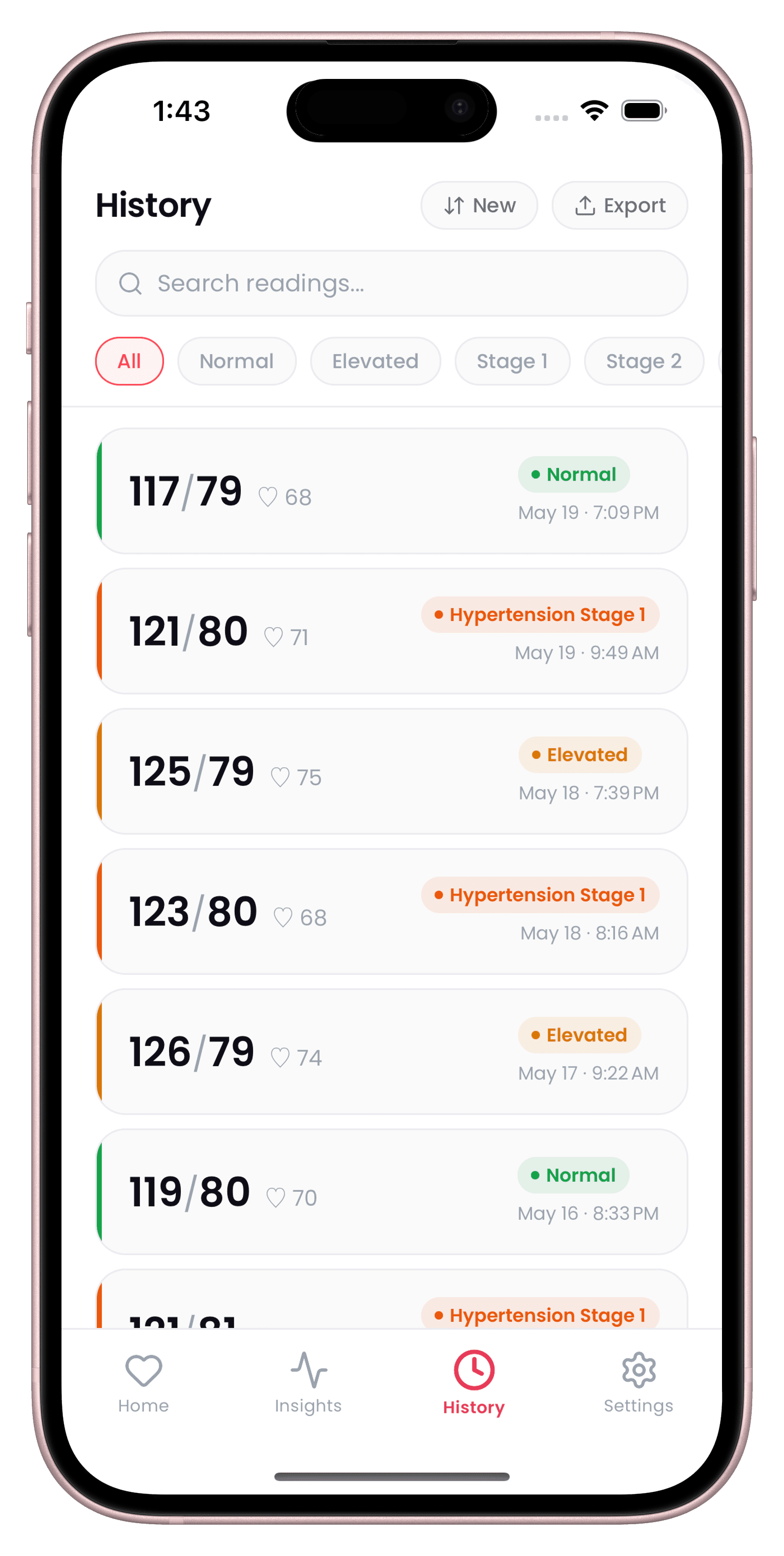
The symbol is easy to forget by the time you see your doctor, so write it down with the reading. A note of "irregular heartbeat symbol" next to the date, time and numbers shows how often it happens and under what conditions.
In the CardiLog app you can add that note to any reading you type or photo-scan, and it stays in your history for your appointment. CardiLog doesn't detect irregular heartbeats or atrial fibrillation itself: it logs what your monitor shows.
Sources
- OMRON: 5 Series Upper Arm Blood Pressure Monitor (BP7255) instruction manual
- Philips Support: What does irregular heartbeat mean?
- iHealth Support: Detecting irregular heartbeat
- Microlife: AFIB technology
- Microlife: FAQ on blood pressure monitors
- NICE NG136: Hypertension in adults, recommendation 1.1.2
- Van Gelder IC et al. 2024 ESC Guidelines for the management of atrial fibrillation. Eur Heart J 2024
- NICE MTG13: WatchBP Home A for opportunistically detecting atrial fibrillation (withdrawn 2023)
- American Heart Association: What is atrial fibrillation?
- American Heart Association: Symptoms of atrial fibrillation
- NHS: Atrial fibrillation
This guide is general information, not medical advice. CardiLog is not a medical device. Talk to your doctor about your own readings.